
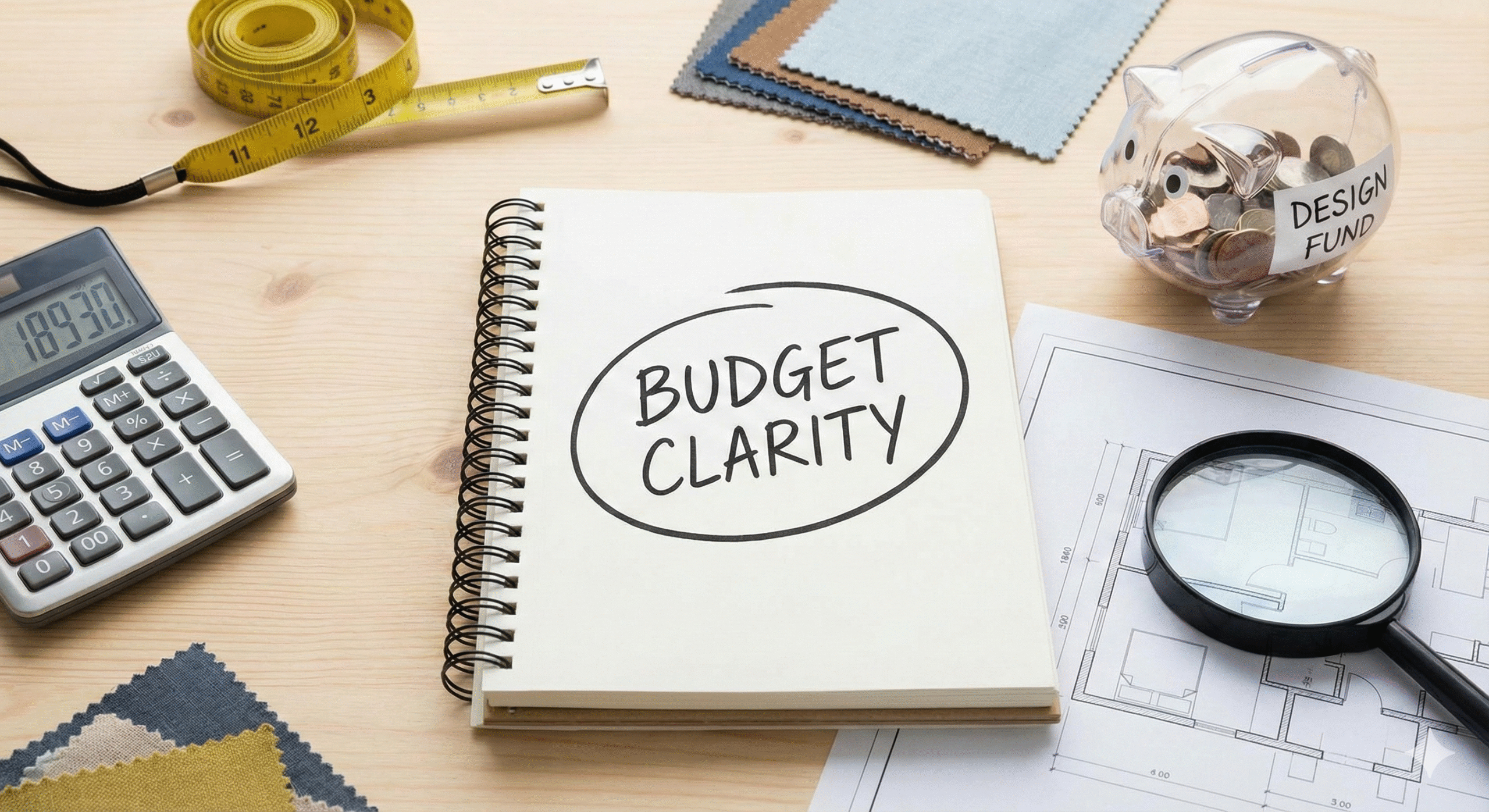
Understanding Interior Design Costs: Bringing Clarity to Your Budget
Interior design turns plain rooms into useful and pleasant places for everyday living. Many find the costs hard to grasp, which can make starting a project feel uncertain. This blog explains the main parts of design spending in clear words, showing how they connect. With this view, you can move forward with a solid plan.
What Influences Your Design Budget
Costs depend on several key points that change with each space. Room size affects how much material and work is needed. City locations often raise fees for transport or skilled help.
Custom details, like built-in shelves, add more than standard pieces. Time for workers varies with the job’s depth and any rush.
- Space size: Larger rooms need more items and effort.
- Custom work: Special shapes or lights take extra planning.
- Home age: Older spots may require fixes first.
- Schedule: Fast pace can mean higher pay for teams.
Early talks on choices help match spending to needs. This keeps the process open and steady.
Material Choices and Their Role in Costs
Materials form the base of any design and shape the total price. Each type has its own look, strength, and care needs, with costs tied to source and lasting power. Wood brings warmth for floors or frames.
Textiles soften seats and windows with color. Metals give firm accents in handles or frames.
- Wood: Strong and timeless, harder kinds cost more.
- Textiles: Simple blends for daily use, finer ones for show.
- Metals: Steel or brass for shine, extra steps raise price.
- Surfaces: Basic layers for low cost, stone for unique feel.
Match picks to room use, kitchens need tough, easy-wipe options; quiet areas suit gentle touches. This keeps value high without waste.
A short review of options can show budget fits, as noted in project guides on Shree Vidhatte.
Smart Questions for Clear Communication
Good talks with the team make the work flow better. Ask about steps and possible changes at the start to spot extra costs. Cover finishes, layouts, and any permits needed.
This aligns views and handles surprises.
- Time stages: Learn each part to see delay effects.
- Work covered: Know what is included in the plan.
- Change rules: Understand fees for swaps.
- Updates: Set reports to track spend.
Such steps build trust and keep focus on the goal.
Designing Within Your Budget Framework
Set clear limits by listing top needs first, like storage, then add others. Allow a small extra, 10%, for small shifts. Check progress to stay on path.
- Main items: Pick for daily help, like strong counters.
- Extra room: Covers minor tweaks.
- Check-ins: Ensure choices fit long use.
- Step plan: Do key spots, add later if able.
For busy homes, use treated wood or simple fabrics. Calm spots pair with soft woods. Active areas take metals and tough surfaces well.
Conclusion
Knowing design costs helps create spaces that fit your life well. From materials to talks, each part leads to a good result. Sites like Shree Vidhatte share examples of home projects. Clear steps bring lasting comfort.
0 comments